Seasonal Events Shape Promotional Strategies and User Activity in Mobile Gaming Apps
Parker Hansen · May 27, 2026
Seasonal Events Shape Promotional Strategies and User Activity in Mobile Gaming Apps
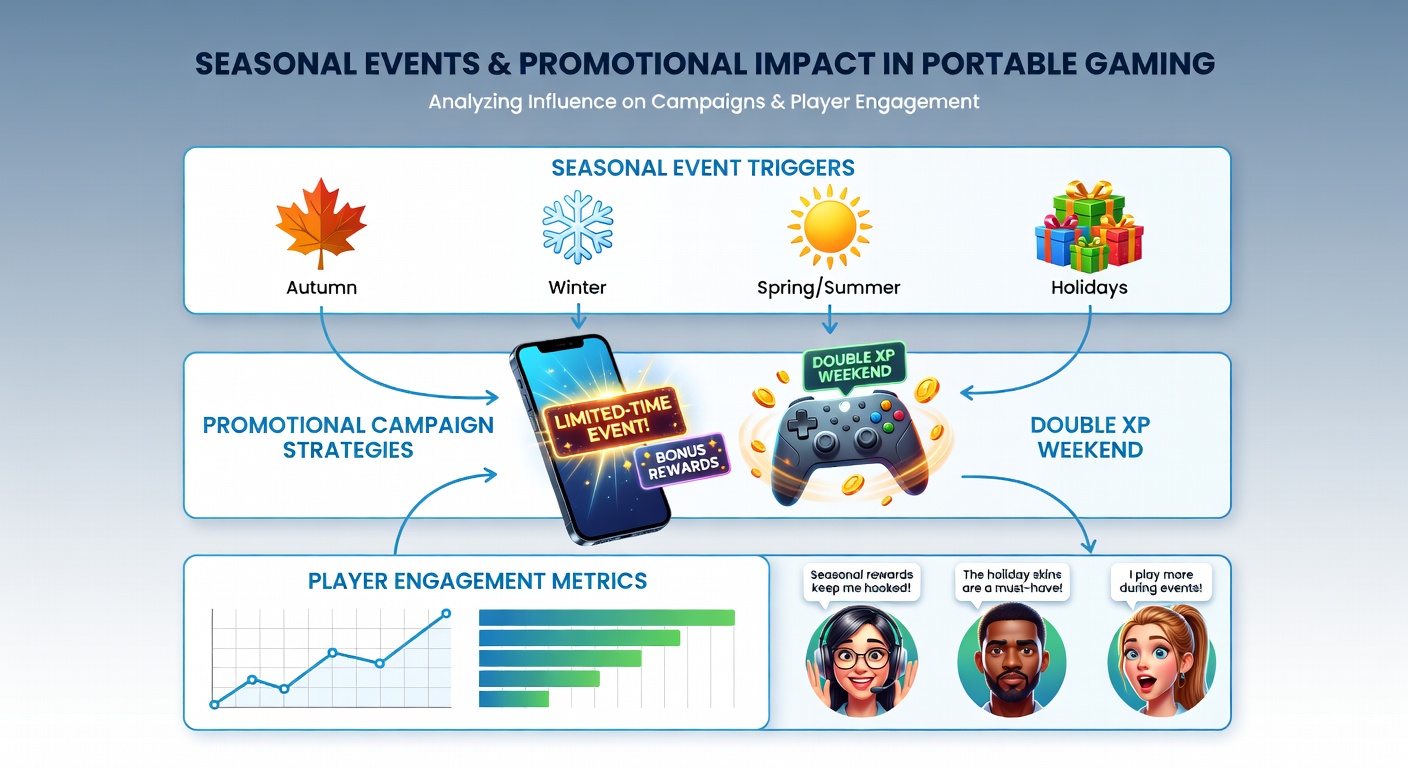
Seasonal events drive adjustments in promotional campaigns across portable gaming applications, with developers aligning in-app offers, events, and rewards to periods such as holidays, school breaks, and cultural observances, while player engagement metrics show corresponding shifts in session lengths and spending patterns according to industry reports.
Holiday Periods Trigger Targeted Campaign Adjustments
Developers release limited-time content during major holidays like Christmas and Halloween, including themed skins, double rewards, and event-specific challenges that encourage repeated logins, whereas data from the Entertainment Software Association indicates download spikes of up to 30 percent in the weeks surrounding these dates as users seek festive activities within games such as Pokémon GO and Candy Crush Saga. Campaigns often bundle virtual currency bundles with holiday motifs, and these promotions run for fixed durations that coincide with consumer shopping cycles, which leads to measurable increases in conversion rates for in-app purchases when compared to non-seasonal weeks.
Research from academic sources at the University of Southern California highlights how narrative-driven events tied to cultural festivals maintain retention by introducing story arcs that unfold over several days, and players participate in collaborative goals that require daily check-ins, which sustains activity levels through the event window even after the initial novelty fades.
Summer and School Transition Periods Affect Engagement Patterns
During summer months, portable gaming applications experience elevated playtime from school-aged users on vacation, and developers respond with outdoor-themed challenges or extended daily login streaks that capitalize on increased availability, while back-to-school periods in late August and September prompt campaigns featuring productivity tools within games or reward systems that ease transitions back to structured routines. Figures from the Interactive Games and Entertainment Association in Australia reveal that engagement in casual mobile titles rises by approximately 25 percent during these transitional phases, driven by promotions that offer bonus progression items for consistent play amid changing schedules.

Data Patterns Reveal Regional and Temporal Variations
Analysis of global user data shows that engagement peaks align closely with local seasonal markers, such as Lunar New Year campaigns in Asian markets that incorporate red envelopes and special gacha pulls, whereas Western regions see stronger responses to events like Thanksgiving or Independence Day sales, and reports compiled by the Canadian Gaming Association document these geographic differences through aggregated app analytics that track regional active user counts. In May 2026, spring-themed updates in titles like Fortnite and Roblox incorporated Memorial Day commemorations alongside early summer previews, which correlated with sustained daily active user growth as documented in preliminary platform metrics released by app analytics firms.
Longer sentences connect multiple factors here because seasonal promotions rarely operate in isolation, they combine with external elements like weather patterns that keep users indoors during extreme conditions or major sports events that compete for attention, yet the coordinated rollout of cross-game collaborations during overlapping seasons produces compounding effects on player retention when developers time their announcements to maximize media coverage.
Campaign Mechanics and Measurement Approaches
Portable gaming applications employ push notifications and in-game pop-ups to promote seasonal offers, and these tactics integrate with broader marketing across social platforms to reach new audiences, while success metrics include not only immediate revenue but also post-event retention rates that indicate whether temporary players convert into regulars. Observers note that games with robust progression systems maintain momentum better because seasonal events feed into existing reward loops rather than creating standalone experiences that end abruptly once the calendar changes.
Evidence from multiple industry datasets confirms that players respond to scarcity mechanics embedded in holiday campaigns, such as time-limited exclusive items, and these create urgency that accelerates spending decisions compared to evergreen content, although the precise impact varies by game genre with battle royale titles showing sharper engagement curves than puzzle or simulation apps during the same periods.
Conclusion
Seasonal events continue to serve as reliable anchors for promotional planning in portable gaming applications because they align with predictable shifts in user behavior and external calendars, and ongoing data collection from regulatory bodies and research organizations supports refinements in campaign timing and content that sustain engagement across diverse player bases throughout the year.